Primordial Light: DEEP SKY Page 6
Gray Line
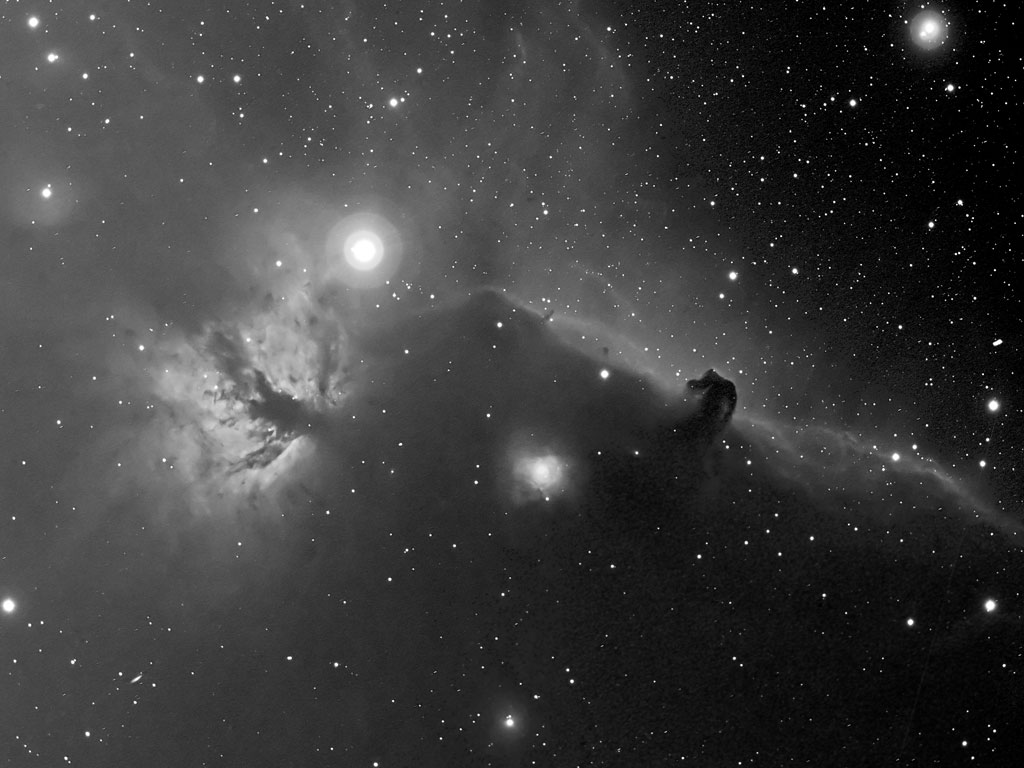
The Horsehead and Flame Nebulae in Red Light
horsehead red

The Alnitak region of the constellation Orion, photographed on November 8, 2009. Alnitak is the brightest star in the photo. Notice the little bump at the 9:00 position on Alnitak. That is one of Alnitak’s much dimmer companion stars. There is a captioned color photo of this region here, and a photo in the narrow Hα spectrum here.

Gray Line
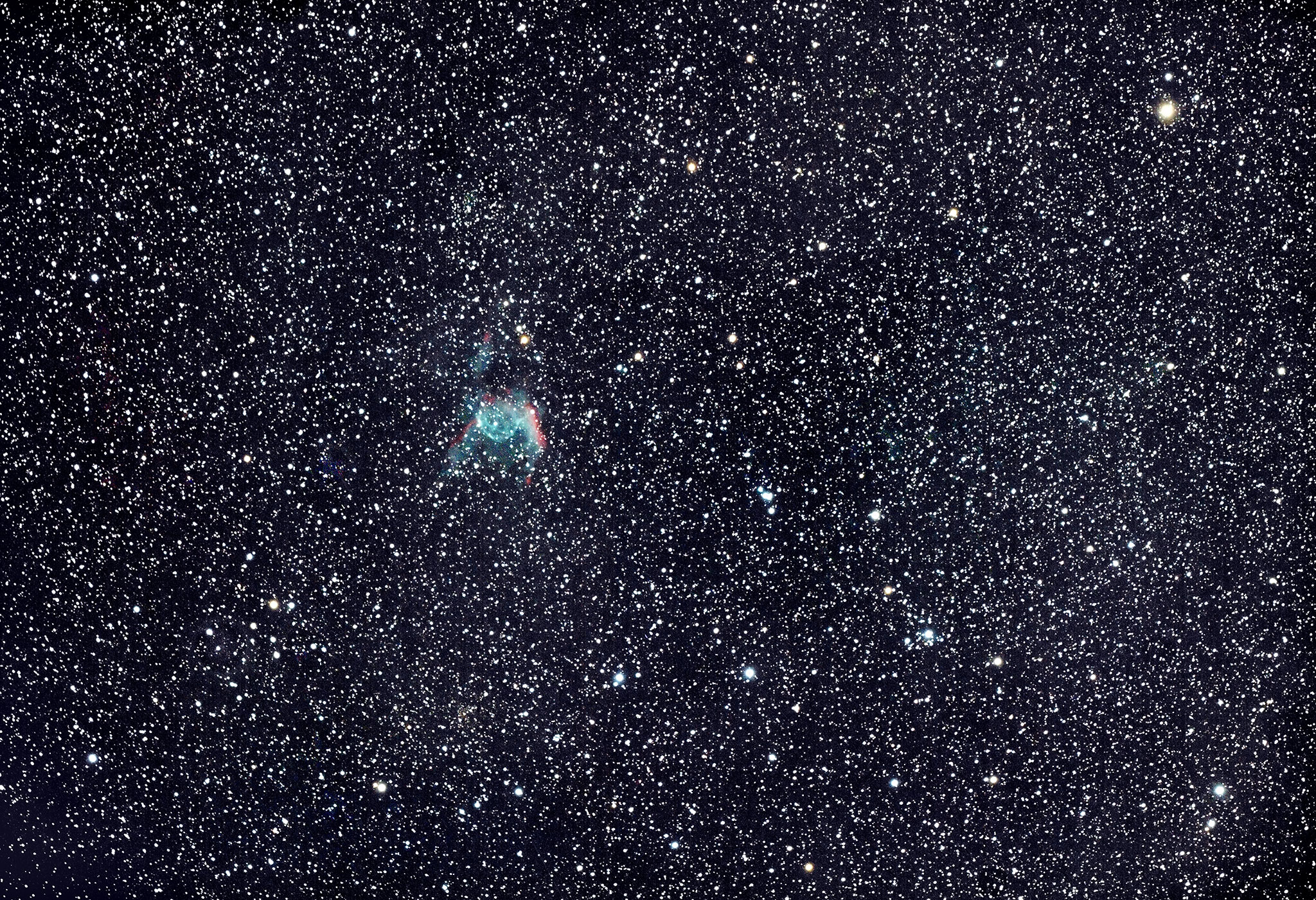
NGC 2359 “Thor’s Helmet” in Canis Major

My God, it’s full of stars—Dave Bowman.

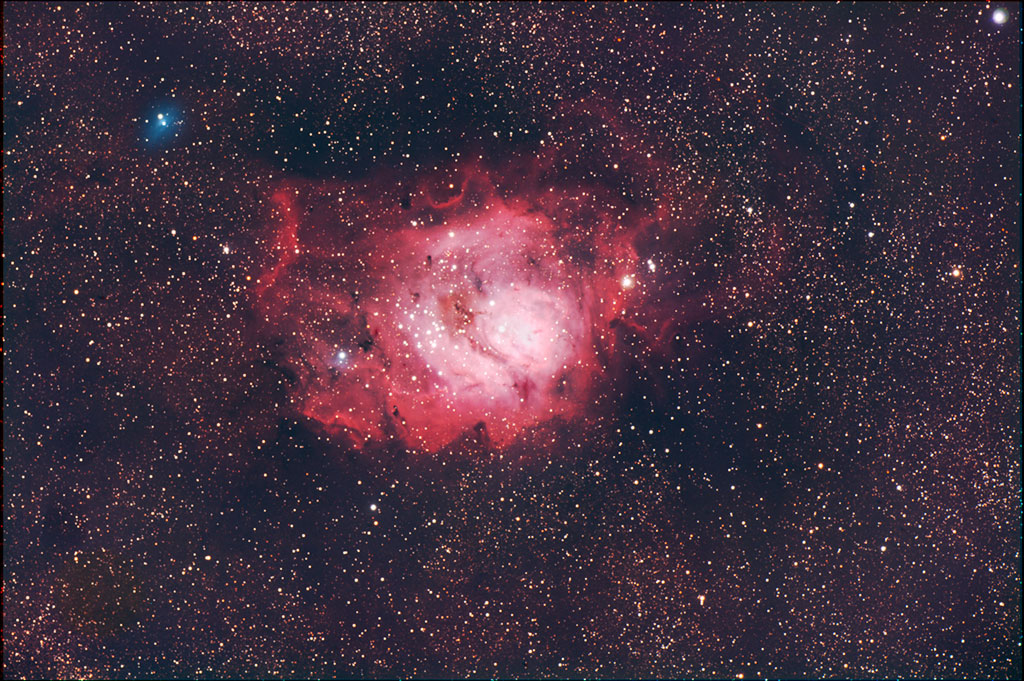
December 16, 2009: the close-up photos of NGC 2359 that are often seen do a beautiful job of revealing the delicate whorls and filaments of the nebula, but they frequently fail to portray the incredibly rich starfield in which the nebula lies, so I chose to take the wide view with a Takahashi FSQ-106ED Astrograph. The field here is about 2.4 X 1.6 degrees. The camera was a Canon 40D, as my SBIG STL-11000M is away being repaired. Captured with Canon’s camera-control software. Processed in Nebulosity, Pixinsight, and Photoshop CS3 Extended. Mount control was done with TheSkyX Serious Astronomer Edition and guiding of the 12 five-minute exposures was via a Starfish guide camera. There is a larger version here. The larger version will open in a new window; re-size your browser window as needed to enlarge it up to its maximum of 2048 X 1401 pixels. All-Mac image.

Gray Line
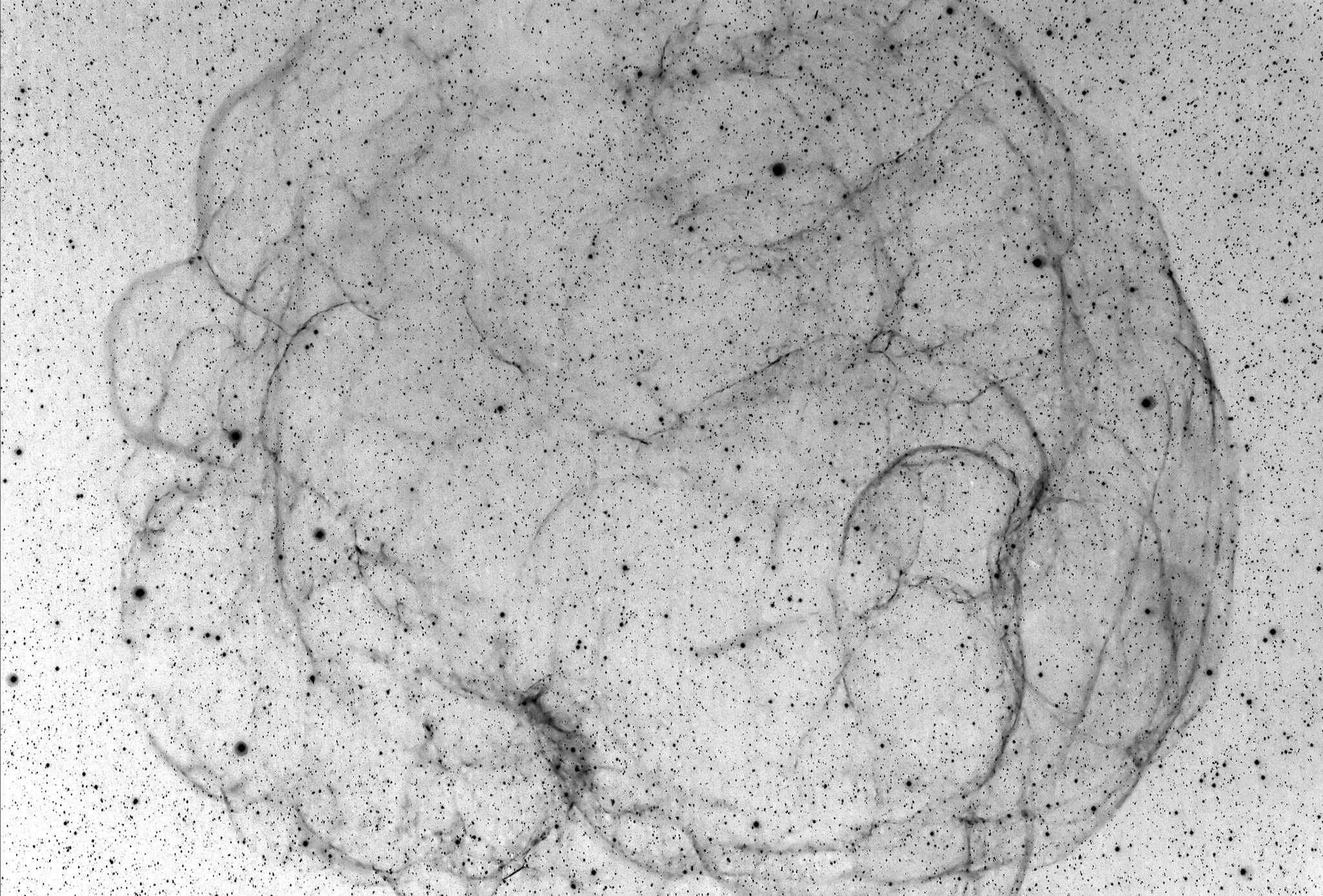
Simeis 147 Revisited, January 9, 2010
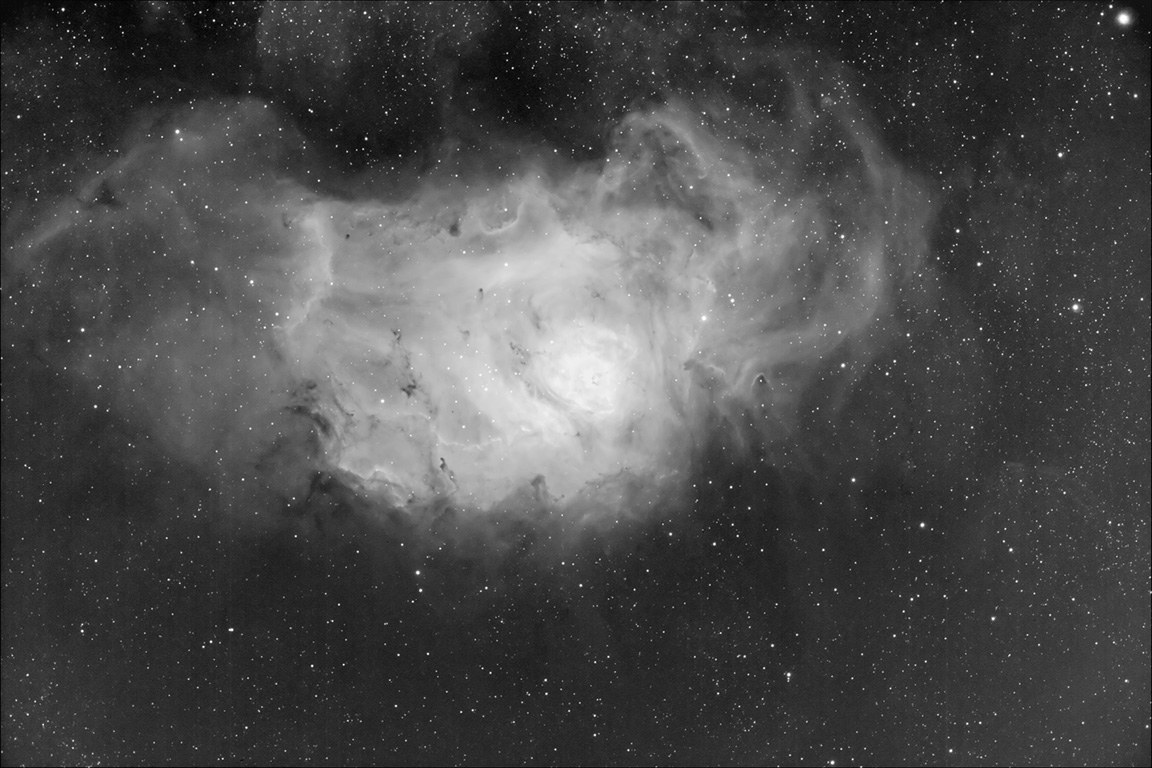
The long-focal-length telescope that I used to photograph Simeis 147 in November, 2009, presented a very narrow view, so I decided to re-do the image using a wide-field astrograph. As this image shows, even my wide-field telescope was not capable of capturing all of this supernova remnant. That will require yet another visit with a focal reducer. This object is nearly eight times the diameter of the full moon. Click the image for a larger version.

Tech stuff: Tak 106 mm refractor/fl 530 mm (f5). Camera: SBIG STL-11000M with 4.5 nm Hα filter centered at 656.3 nm. FOV: 3° 53' x 2° 35'. Eight 15-minute exposures. All-Mac image: TheSkyX SAE, Equinox 6, Nebulosity, PHD Guider, Photoshop CS3.
Gray Line
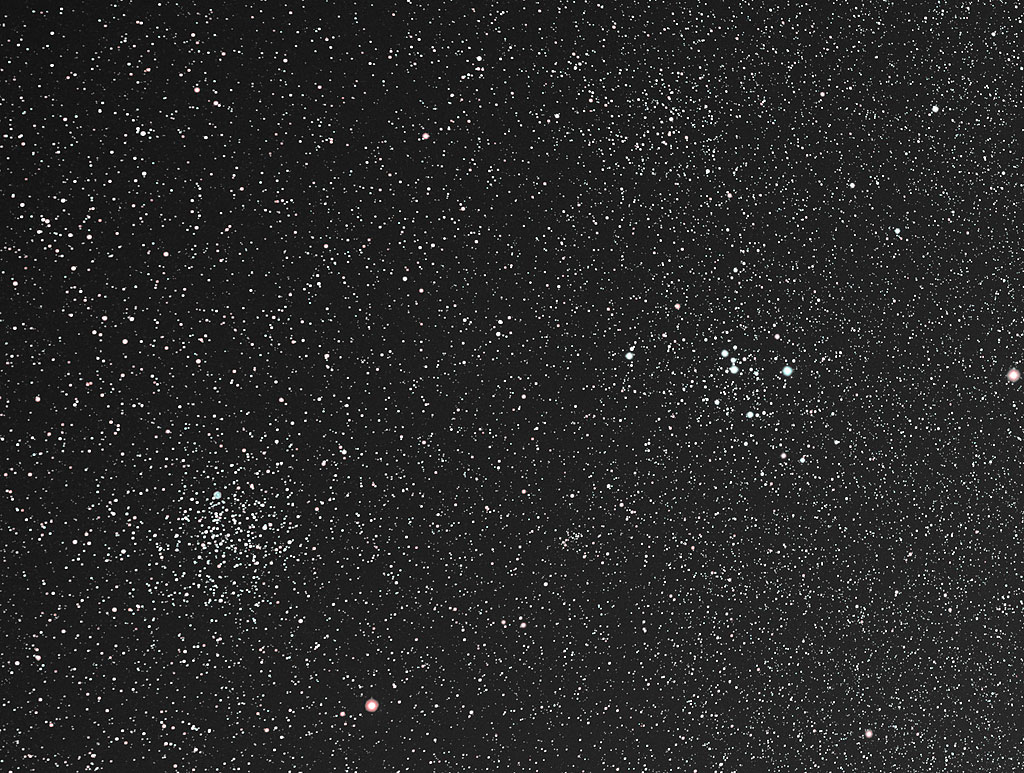
M46 and M47, January 18, 2010
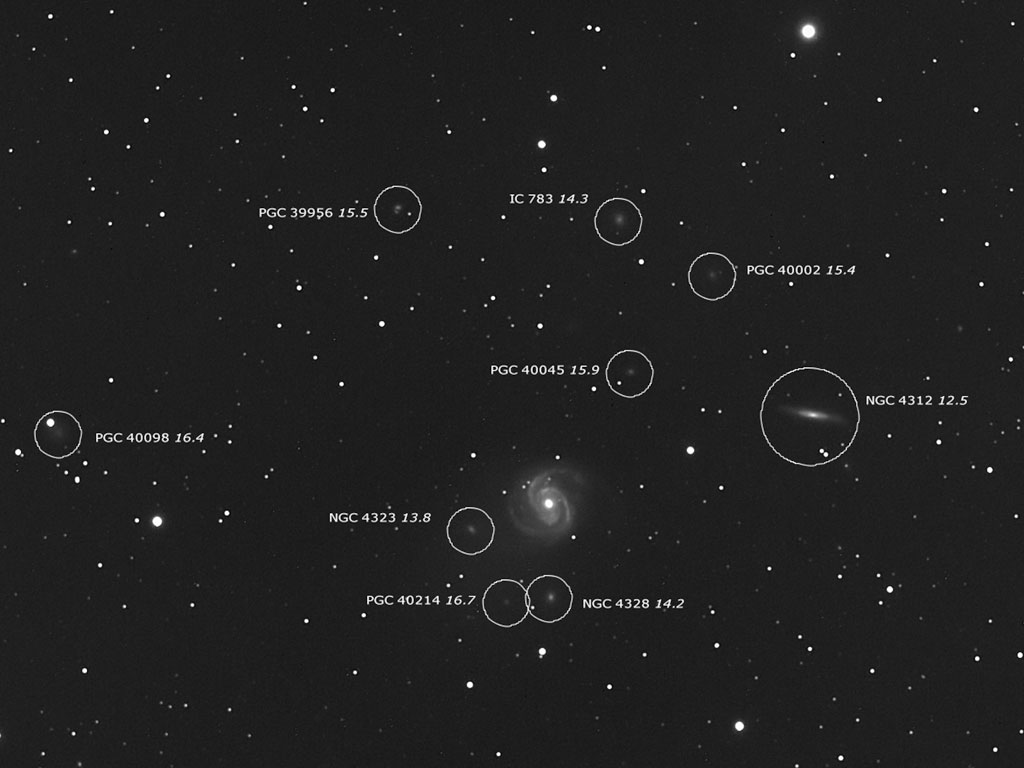
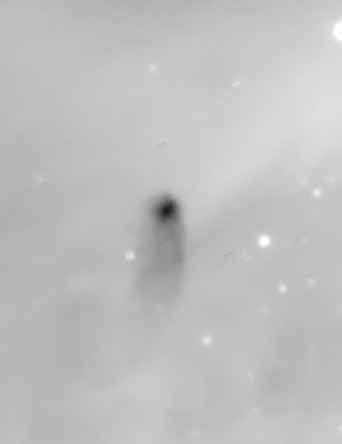
More for your money. Pass your cursor over the image to see four star clusters identified along with one planetary nebula (NGC 2438). The brightest star in the image is magnitude 5. The faintest star in the full-size image is less than magnitude 21. Here a magnitude 20 star is identified.

RGB image from an SBIG STL-11000M on a Tak FSQ-106. All-Mac image: TheSkyX SAE, Equinox 6, Nebulosity, PHD Guider, Photoshop CS3, Pixinsight.
Gray Line
More Deep Sky
1
2
3
4
5