| Primordial Light: ASTROPHOTOGRAPHY |
|
|
| |
 |
New: |
|
|
|
|
 |
|
Primordial
Light is the name given to the oldest light in the Universe—the
13.7 billion-year-old photons that come to us from the Big Bang. If
you browse this site you may learn a little bit about the Primordial
Light and you will see—in
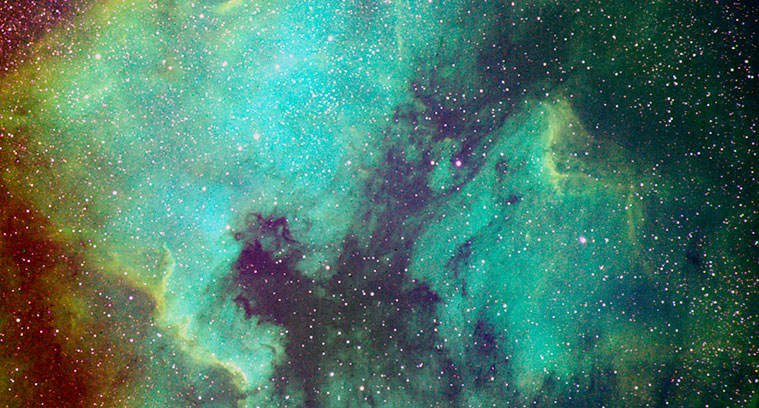
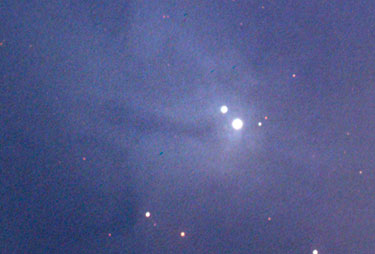
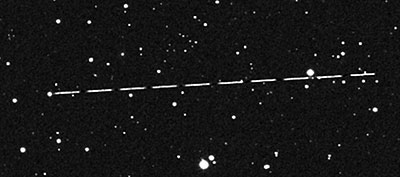
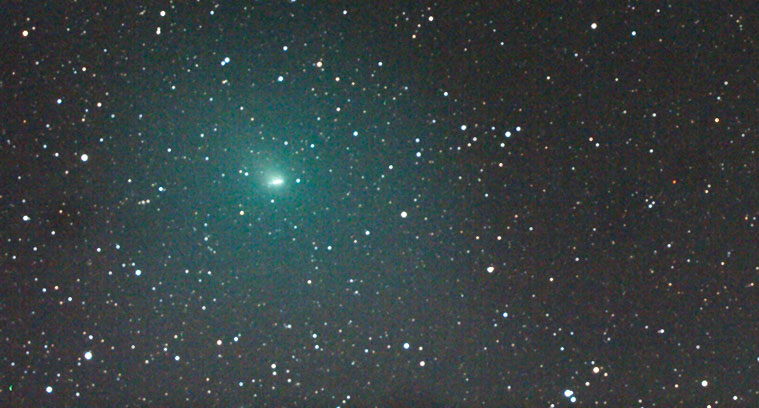
fact you have already seen in the image above—what results
when photons travel through the cosmos for a long time, even many millions
of years, before encountering a Charge-Coupled Device (CCD) inside
a camera that is attached to one of my telescopes. I will tell tell
you how you can capture some 2.5 million-year-old photons
with your own two eyes—without
a telescope. Unless otherwise noted, I personally made all of the photgraphs
and other graphics on this web site. If not otherwise labeled, the content of this site
is copyrighted © 2008-2009 by
me, David Illig. |
| You can
enjoy the astrophotographs on this site without reading anything below
this line, but if you would like to know a bit more about the
Universe as a whole, and the tiny corner where you and I live, you may
find something of interest here. |
|
| The
Deep Sky,
as used in astronomy, refers to all of the objects in the Universe
that are not gravationally bound to our Sun, from the nearest star to
the most distant Quasar. To say that that is a lot of mass
is a gross understatement. The category includes, in no particular
order, Galaxies (and clusters and supercluster of Galaxies); Clouds
of gas and/or dust, which we call Nebulae (or Nebulas); Star Clusters,
which are agglomerations of stars like a Galaxy, but with far fewer
stars; Individual Stars that are visible because they are relatively nearby;
Supernovas, which are stellar explosions accompanied by the release of
such vast quantities of energy that their light may be seen across the
Universe; and Novas, which are explosions that take place on the surface
of a Star when superheated gas from a companion star falls on its surface
and causes runaway thermonuclear explosions. And then there is Dark
Matter.
We have never seen it and we don’t know what it is, but we know
it exists because it has gravity, and the effect of the gravitational
force exerted by Dark Matter can be measured on a large scale throughout
the Universe. About 25% of the matter in the Universe is
Dark Matter. Finally, there is Dark
Energy, which is believed to be responsible for the acceleration
of the expansion of the Universe. Dark Energy comprises 70% of
the content of the Universe. Where does that leave us? We, and
everything we are familiar with, are made up of what we have always
thought of as normal matter, but the stuff we are made
of is not normal at all because it comprises only 5% of the content
of the Universe. |
| Cosmology is
the study of the origin, evolution, large-scale structure, and present
state, and likely future of the Universe. Whew! Cosmology is one of astronomy's raisons
d'être. It is a complex field that is beyond my ability to describe
in depth, but you can't learn about astronomy, especially
deep-sky astronomy, without learning a little bit about cosmology, so
we will touch on the subject at some points, particularly on the Deep
Time and Science is... pages. |
| M42, NGC 2903, Zubenelgenubi, Alpha Orionis? Who
makes up these names? |
| Astronomy is a Science. What
is science, and what is a scientific theory? |
How can Photons have
traveled for 150 million years if the Universe is 6,000 years
old?
Updated December 8, 2009. |
| |
|
|
|
|
|
|